Alphabet bingo
Teach new vocabulary and enhance language skills with our alphabet bingo card template. Fully customizable card r learning the English language. Play and learn the alphabet with Bingo!
- 5×5 grid
- 26 squares
- Easy
- Ages 5+
- Free to print
Free account: print up to 10 unique cards per batch and host 8 players online. Need more?

Items in this card
Every square on the card. Change any of them in the editor, or print it exactly as it is.
- A a
- B b
- C c
- D d
- E e
- F f
- G g
- H h
- I i
- J J
- K k
- L l
- M m
- N n
- O o
- P p
- Q q
- R r
- S s
- T t
- U u
- V v
- W w
- X x
- Y y
- Z z
More about this bingo card
Alphabet bingo is an educational and entertaining game designed to help children learn and recognize letters in a fun, interactive setting. Ideal for preschoolers, kindergarteners, and early elementary students, this game blends the excitement of bingo with the foundational task of alphabet recognition. Whether you’re a teacher looking to supplement your classroom activities, a parent seeking educational games for home, or a caregiver at a daycare, alphabet bingo can provide a valuable and engaging learning experience for kids.
How to play alphabet bingo
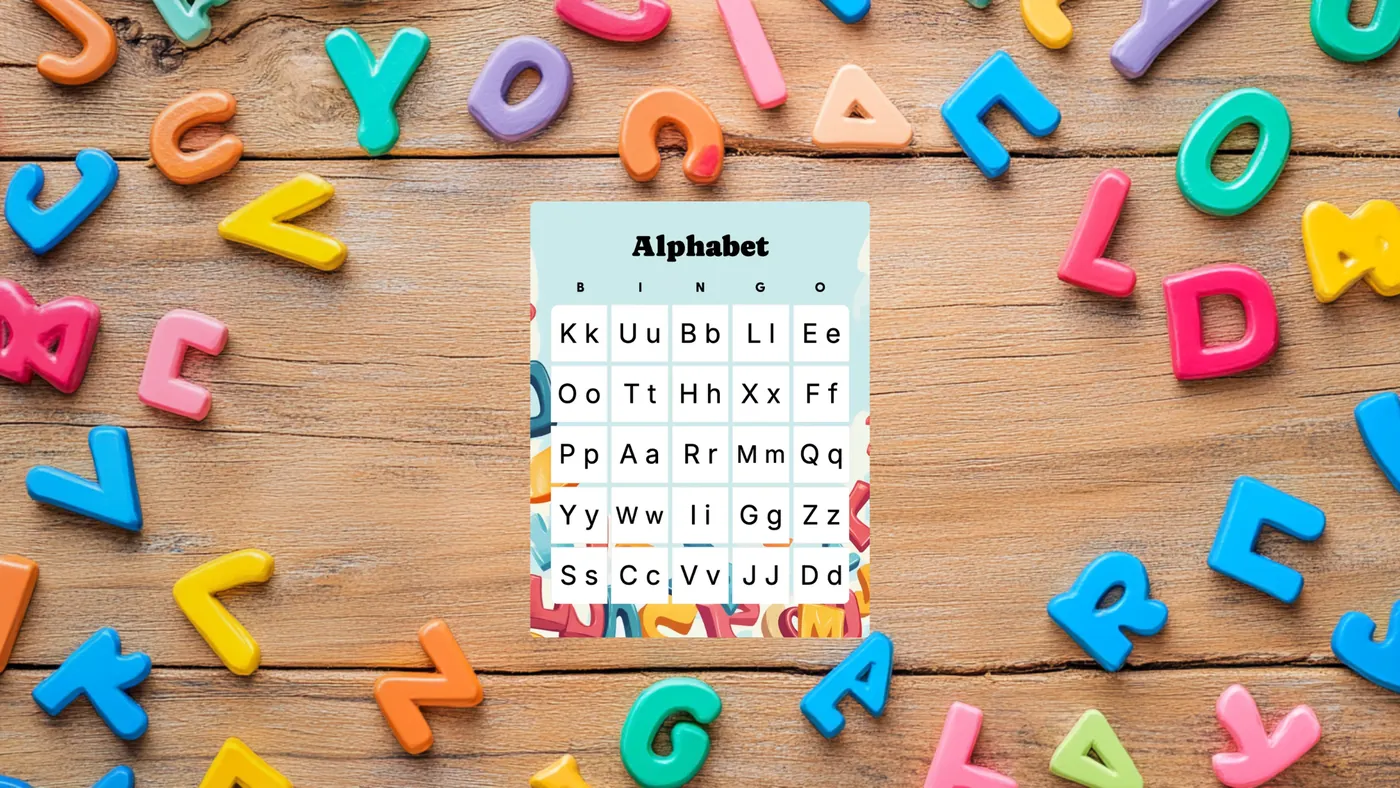
Alphabet Bingo is a fun and educational twist on the classic bingo game, perfect for kids learning their letters. Here’s a quick guide on how to set up and play:
1. Prepare your bingo cards
- Create bingo cards with a 5×5 grid. Each square should have a different letter of the alphabet. For a twist, you can use both uppercase and lowercase letters.
- You can generate and print these cards online using our bingo card generator, which offers customizable options to fit your needs.
2. Choose a caller
- The caller will need a set of alphabet cards or tiles to randomly draw from. If you don’t have a set, you can make your own with a few index cards or pieces of paper.
3. Distribute the cards
- Give each player one bingo card and some markers (like small buttons or coins) to cover the squares.
4. Start calling letters
- The caller draws a letter and announces it to the group. For example, “B as in Ball.”
- Players mark off the letter on their card if they have it.
5. Win the game
- The first player to get five letters in a row (horizontally, vertically, or diagonally) shouts “Bingo!” and wins.
- Double-check their card to make sure they have the right letters before declaring them the winner!
Alternative ways of playing alphabet bingo
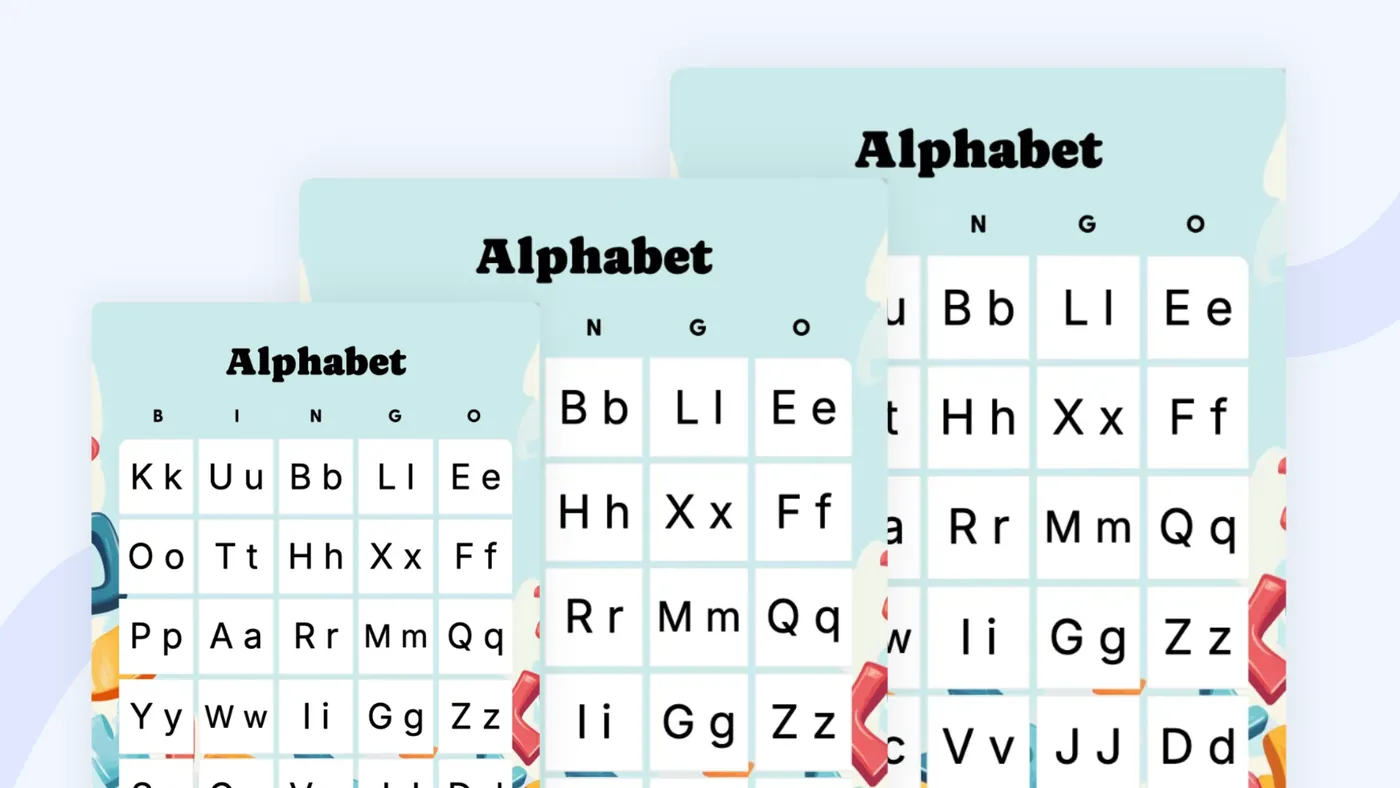
In the classroom: Enhancing literacy skills
- Bingo card creation: Distribute bingo cards with a mix of letters from the alphabet. For younger children or beginners, focus on uppercase letters; for those a bit more advanced, mix in lowercase letters to challenge them.
- Interactive calling: Call out letters randomly or use flashcards. To add a physical element, consider showing the letter and doing an action that starts with that letter (e.g., “B” for “bounce”).
- Recognition and marking: Students mark the called letters on their cards. Use fun markers like stickers, stamps, or dry-erase markers if using laminated cards.
At home: Family fun with letters
- Personalized bingo cards: Create bingo cards tailored to the learning level of your child, perhaps focusing on letters they find challenging or mixing in both uppercase and lowercase letters.
- Engaging gameplay: Turn the letter calling into a game of discovery. For example, find objects around the house that start with the called letter and use them as a fun learning tool.
- Rewards and motivation: Set up a reward system for wins, like choosing the next book for storytime, to motivate and encourage learning.
At daycare or preschool: Social learning with letters
- Group play: Encourage group play to foster social skills along with letter recognition. Children can help each other find the letters on their cards, promoting teamwork.
- Creative card design: Involve children in creating their own alphabet bingo cards as a craft activity, allowing them to decorate and personalize their cards with drawings or stickers of items that start with each letter.
- Celebration of learning: Celebrate each child’s win with a group cheer or a special song, making learning a celebratory and collective achievement.
Alphabet bingo patterns
Alphabet bingo patterns bring a creative twist to the classic game, challenging players to complete shapes like letters A, L, and T on their cards. It’s a fresh way to keep things interesting and adds an extra layer of fun for both kids and adults. Whether you’re aiming for the straight lines of an “L” or the more complex shape of an “A,” these patterns keep everyone on their toes. Ready to play? Let’s see who can spell out a win first!
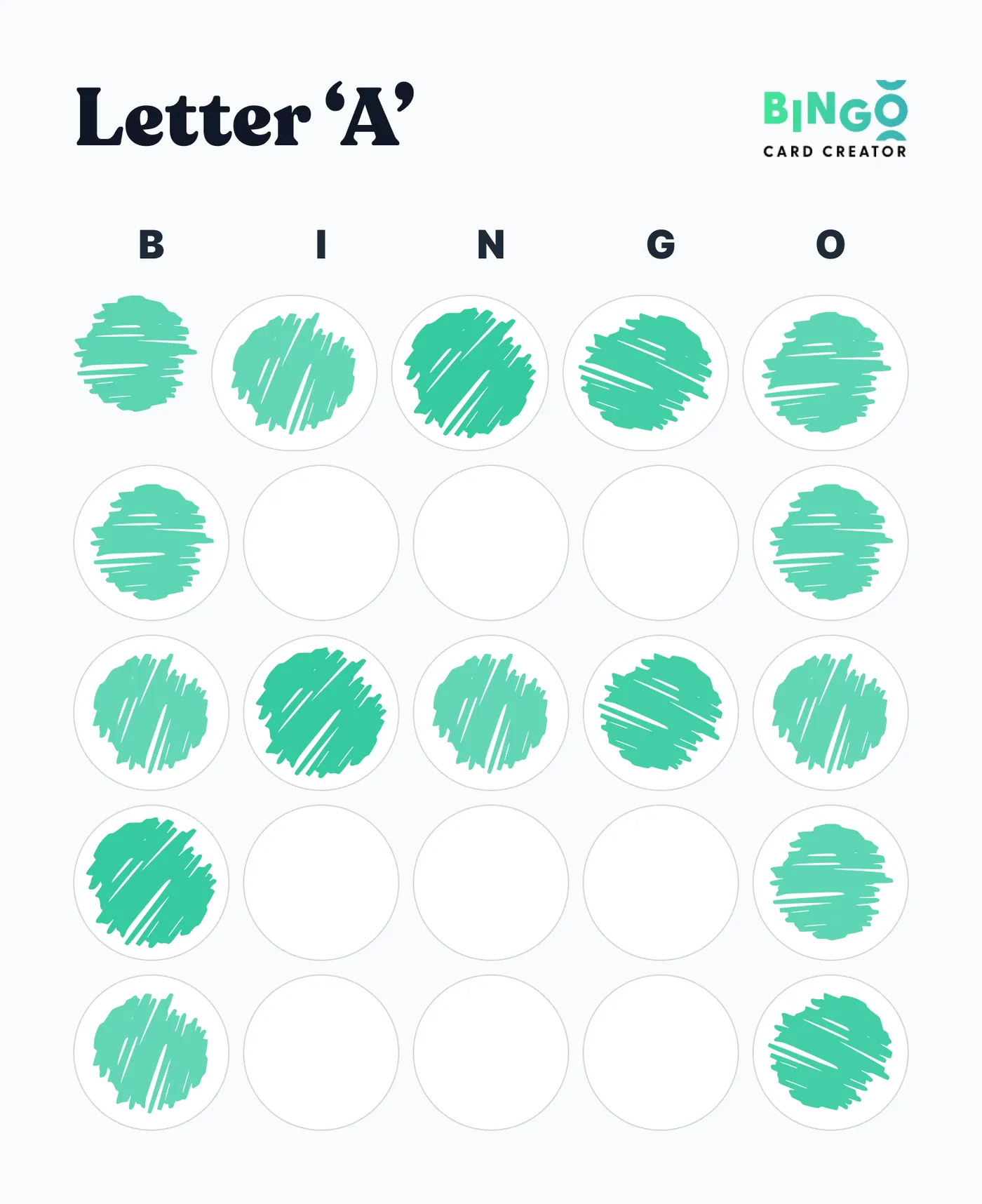
- How it works: Players mark squares in the shape of the letter “A” on their bingo cards, using two vertical lines and a crossbar in the middle.
- Why it’s great: The “A” pattern adds a fun challenge with its unique shape, requiring players to cover multiple parts of the card for a win.
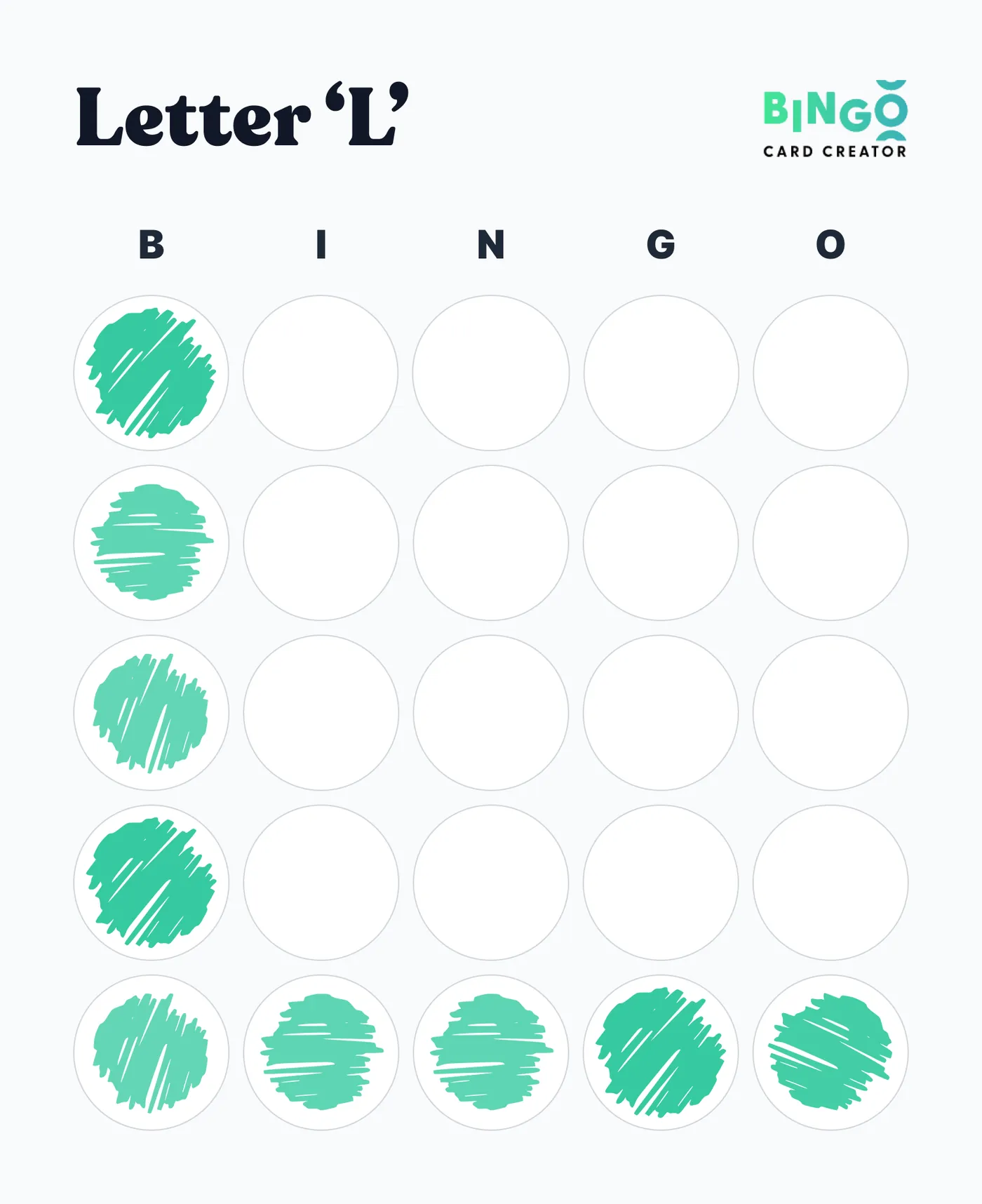
- How it works: Players mark squares in the shape of an “L,” covering a vertical line on the left and a horizontal line at the bottom.
- Why it’s great: The “L” pattern is simple and easy to spot, making it perfect for quick games and beginners.
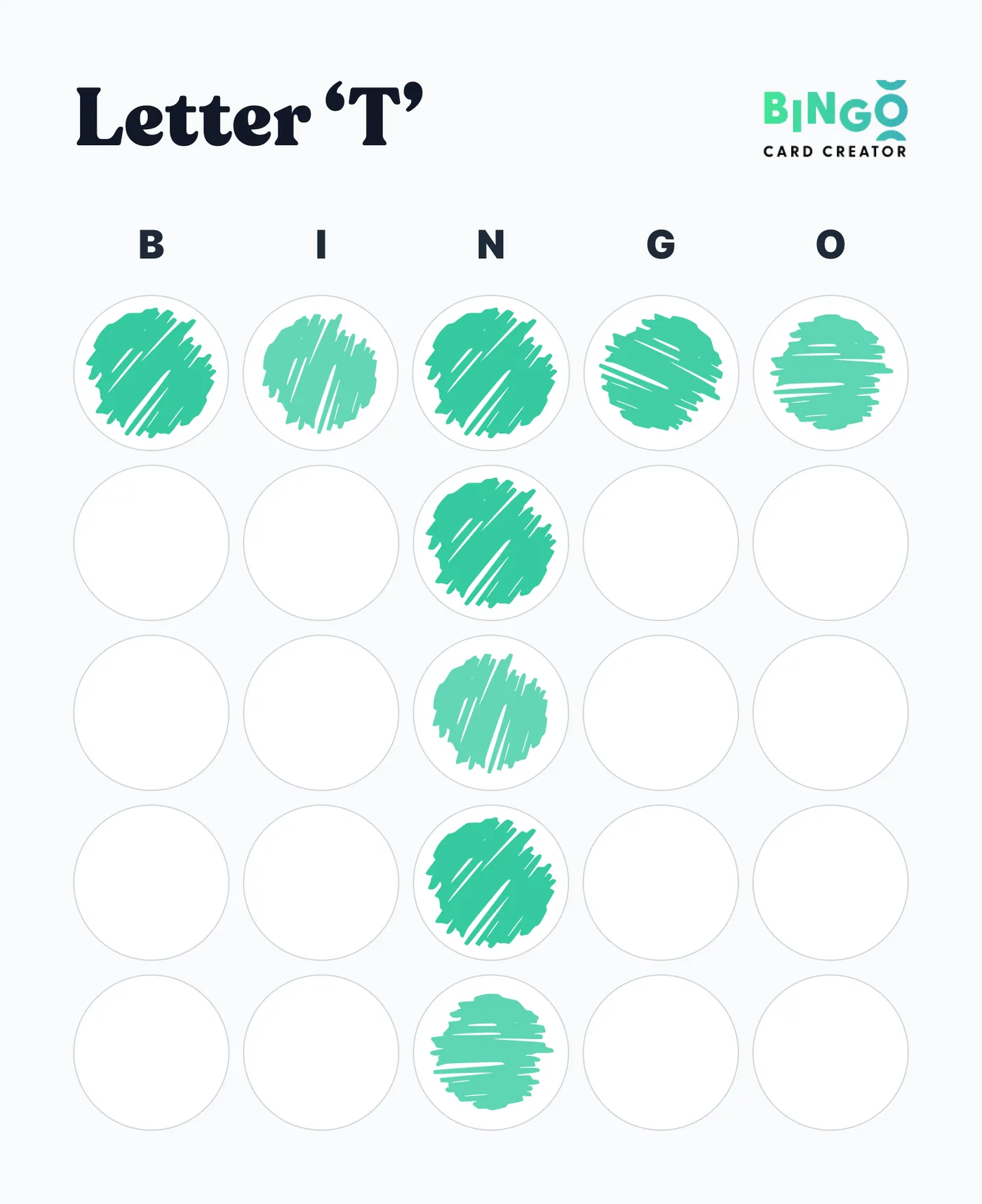
- How it works: Players mark squares in the shape of a “T,” with a horizontal line across the top and a vertical line down the middle.
- Why it’s great: The “T” pattern is versatile and easy to achieve, adding excitement as players race to complete the central line.
Enhancing your alphabet bingo experience
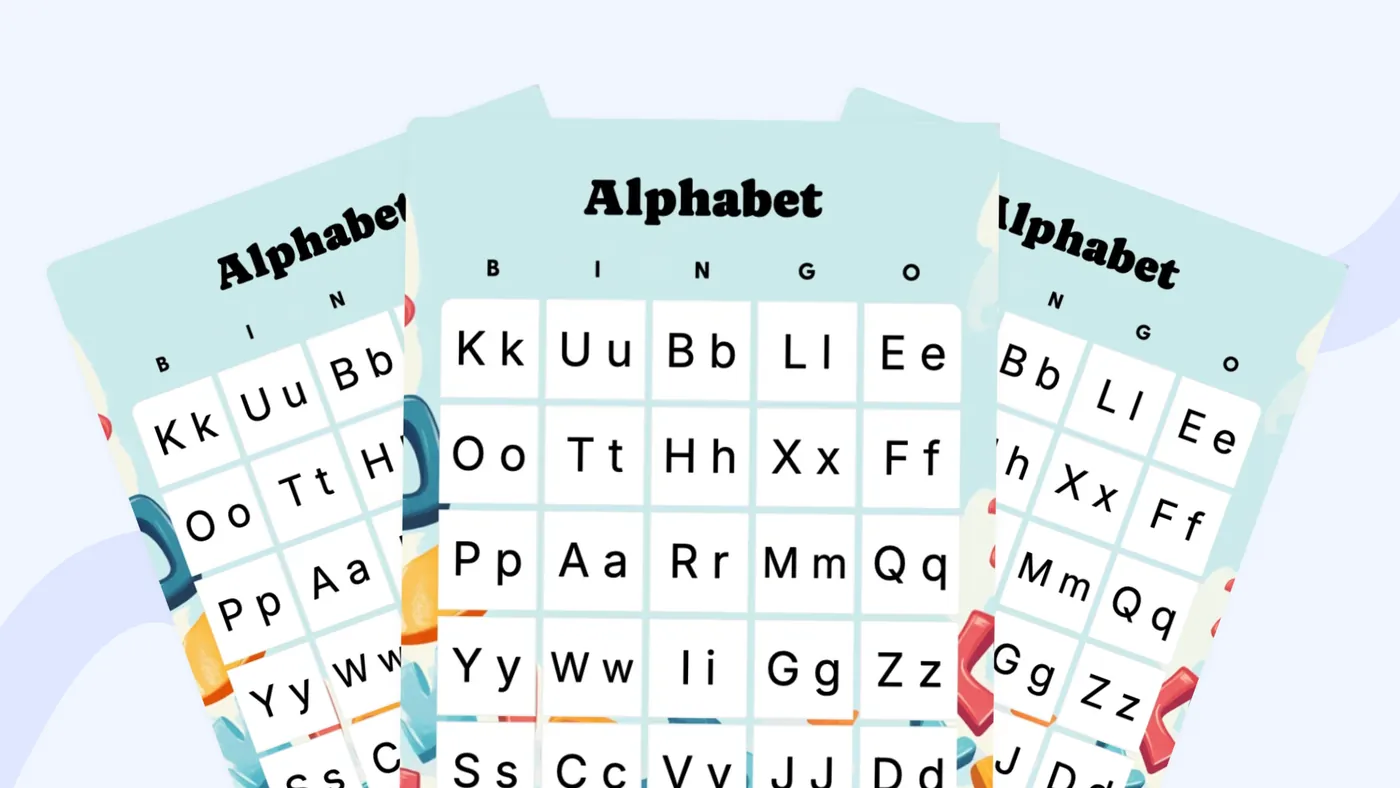
Adaptive learning: Meeting each child’s needs
- Progressive difficulty: Start with a subset of the alphabet for beginners, gradually increasing to the full alphabet as children’s recognition skills improve.
- Incorporate phonics: For an added challenge, call out sounds instead of letter names, helping children connect letters with their phonetic sounds.
Creative play: Beyond the bingo card
- Alphabet crafts: Supplement bingo games with crafts related to the letter of the day, reinforcing the letter’s shape and sound through creative activities.
- Storytime integration: After playing alphabet bingo, read a book where the main word or theme starts with the winning letter, linking the game to reading skills.
Top Tip
Why not try one of our many pre-made educational bingo cards below? We’ve got some to get you started below!





FAQs
How do I create alphabet bingo cards?
You can easily create alphabet bingo cards using online bingo card generators like ours, or simply by drawing grids on paper and filling them in with letters. For a reusable option, laminate the cards and use dry-erase markers.
What are some effective rewards for alphabet bingo?
Bingo rewards can be simple and educational, such as stickers, extra playtime, or a certificate of achievement. The key is to make the reward system encourage continued learning and excitement about letters.
Can alphabet bingo help with both uppercase and lowercase letter recognition?
Yes, alphabet bingo can be adapted to focus on either uppercase or lowercase letters, or both. This flexibility makes it an excellent tool for teaching letter recognition at various stages of learning.
How can alphabet bingo be adapted for virtual learning?
For virtual learning environments, use digital bingo platforms like ours where students can mark their cards online. Call out letters via video conferencing, making the game accessible and engaging for remote learners.
Final words
Alphabet bingo is not just a game; it’s a dynamic approach to learning that combines fun with educational outcomes. By engaging children in playful recognition of letters, it lays the groundwork for literacy in an enjoyable, memorable way. So, let’s get those bingo cards ready and embark on a journey of letter discovery and learning!
Print it, or play it live.
- 1
Open it in the editor
Hit “Customize & print”. Every square is already filled in, so you can print straight away.
- 2
Make it yours
Change any square, pick a grid size, and add your own title and footer. Plus and Pro add pictures and design changes.
- 3
Print unique cards
Download a PDF where every card is shuffled differently, so no two players have the same card.
- 4
Or play online
Share a link and everyone plays on their phone, with a built-in caller that marks the winners.
Questions, answered
How do I create alphabet bingo cards?
You can easily create alphabet bingo cards using online bingo card generators like ours, or simply by drawing grids on paper and filling them in with letters. For a reusable option, laminate the cards and use dry-erase markers.
What are some effective rewards for alphabet bingo?
Bingo rewards can be simple and educational, such as stickers, extra playtime, or a certificate of achievement. The key is to make the reward system encourage continued learning and excitement about letters.
Can alphabet bingo help with both uppercase and lowercase letter recognition?
Yes, alphabet bingo can be adapted to focus on either uppercase or lowercase letters, or both. This flexibility makes it an excellent tool for teaching letter recognition at various stages of learning.
How can alphabet bingo be adapted for virtual learning?
For virtual learning environments, use digital bingo platforms like ours where students can mark their cards online. Call out letters via video conferencing, making the game accessible and engaging for remote learners.
Related categories
More cards like this
- Colors bingo9 squares · Free
- Fruit bingo9 pictures · Free
- Telling time clock image bingo16 pictures · Free
- Vegetable bingo9 pictures · Free
- 1 – 100 numbers bingo100 squares · Free
- 2nd grade Dolch sight words bingo47 squares · Free
- 3rd grade dolch sight words bingo42 squares · Free
- About my vacation bingo25 squares · Free
- Addition and subtraction bingo20 squares · Free
- Adjective scavenger hunt bingo23 squares · Free
Make a card from scratch?
Type your own squares, or describe your event and let AI fill all 24 in seconds.